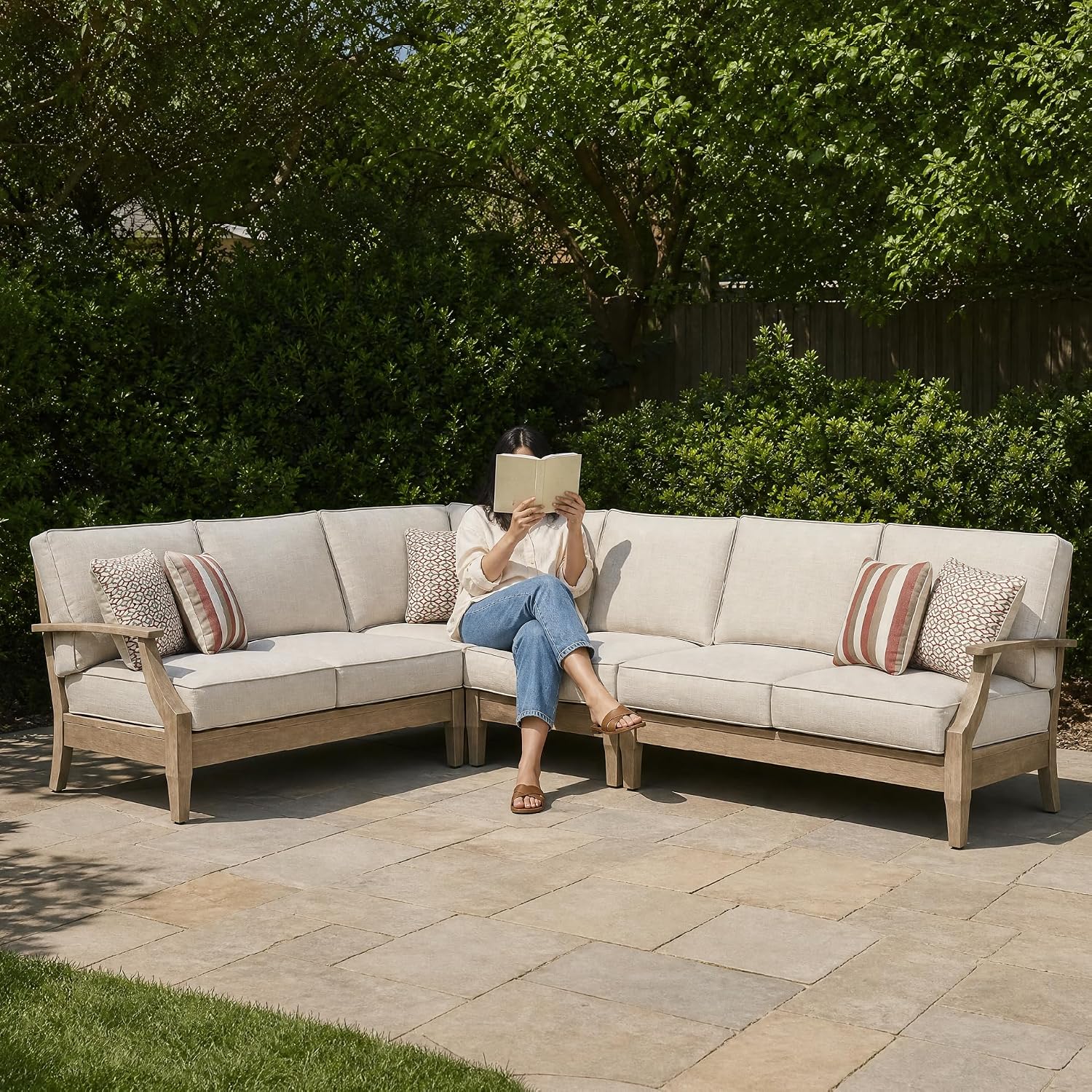
If you’ve started shopping for solid-wood outdoor furniture and noticed that some sets are priced at $800 and others at $8,000 — even though both say “wood” on the tag — you’re asking exactly the right question. The difference almost always comes down to species: which tree the lumber came from, how dense and oily its grain is, and how long it can sit outdoors in rain, sun, and humidity before it needs serious attention. This article compares the three species you’ll encounter most often at the mid-to-premium tier of the outdoor furniture market — teak, eucalyptus, and acacia — and gives you a clear framework for deciding which one is right for your specific situation. By the time you finish reading, you’ll know what each species actually costs over five and ten years (not just at purchase), what the warranty language means, and which one deserves your budget.
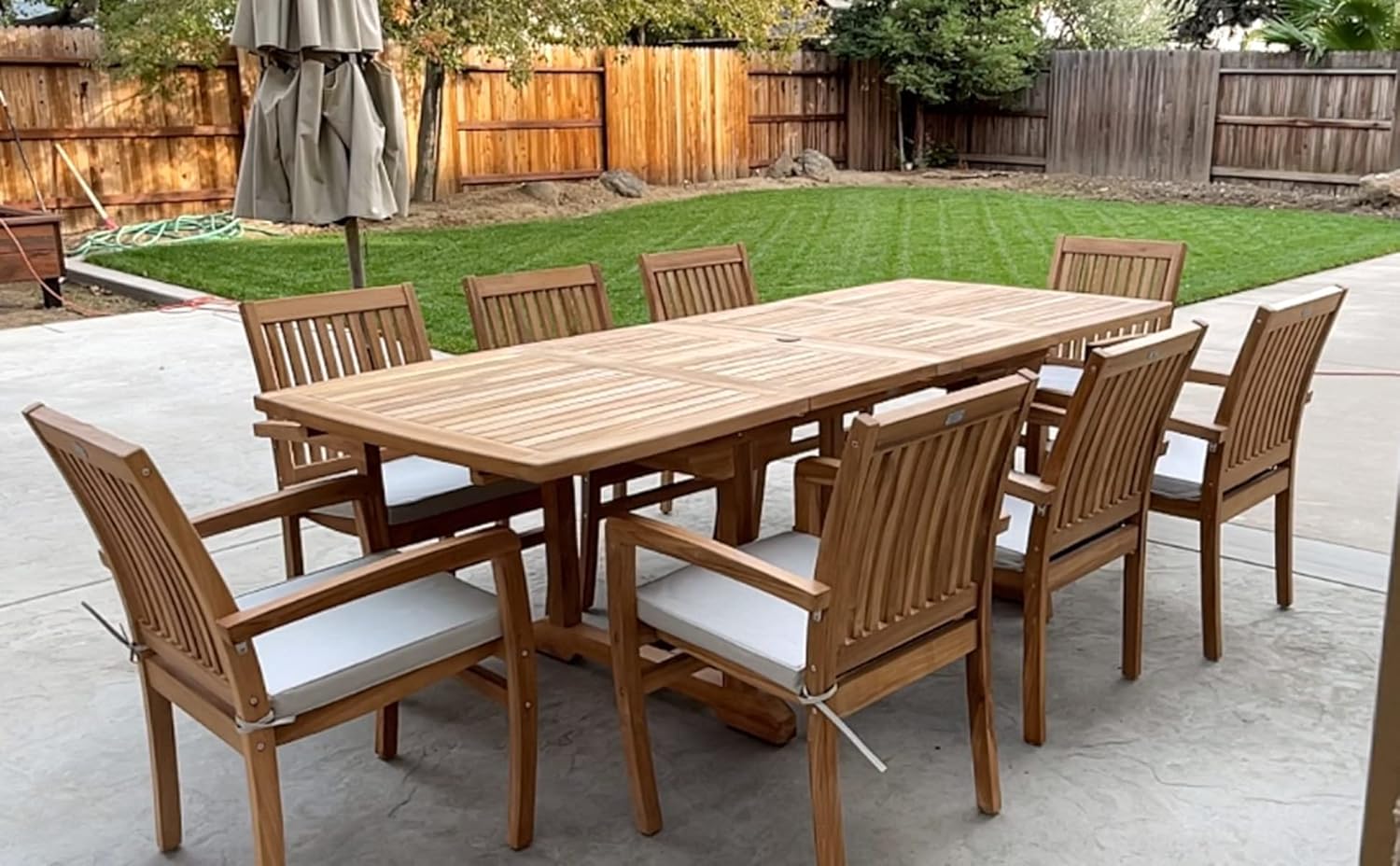
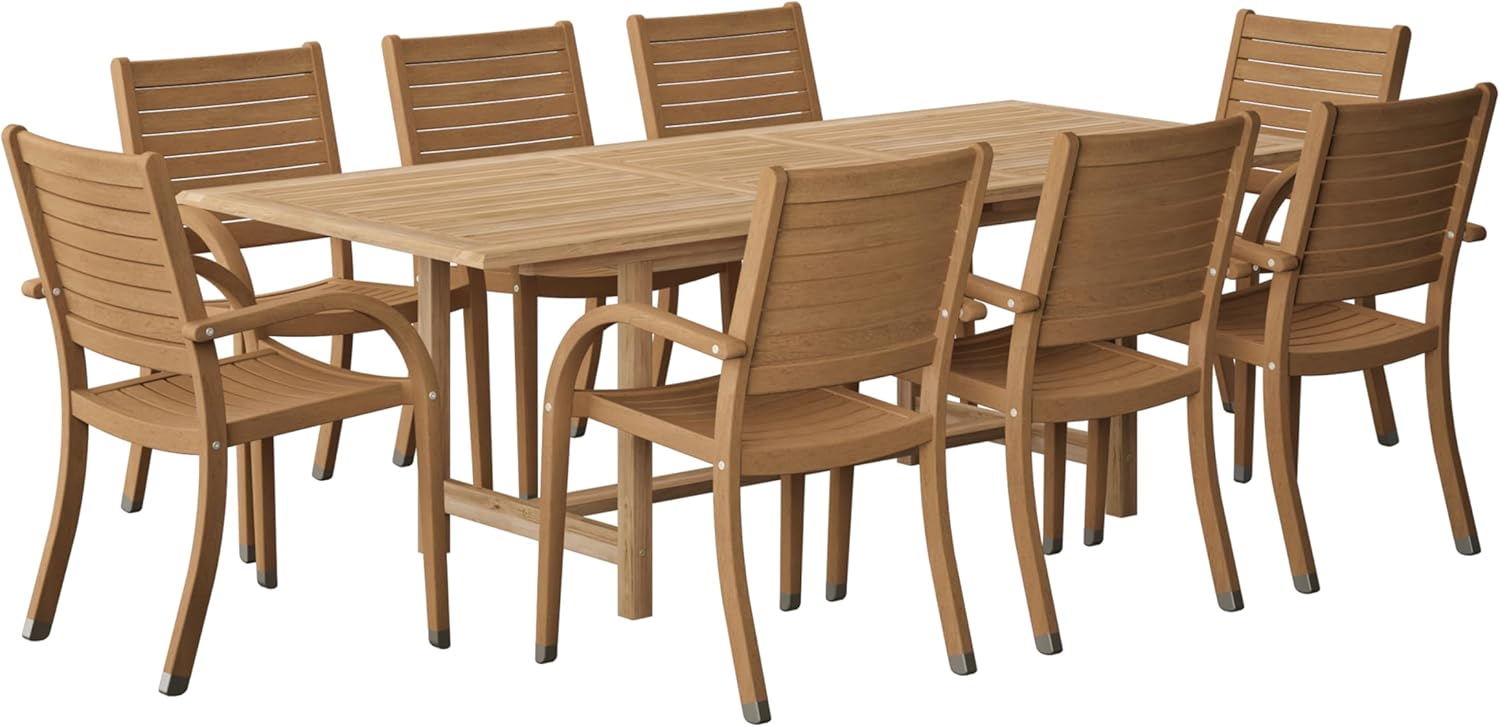
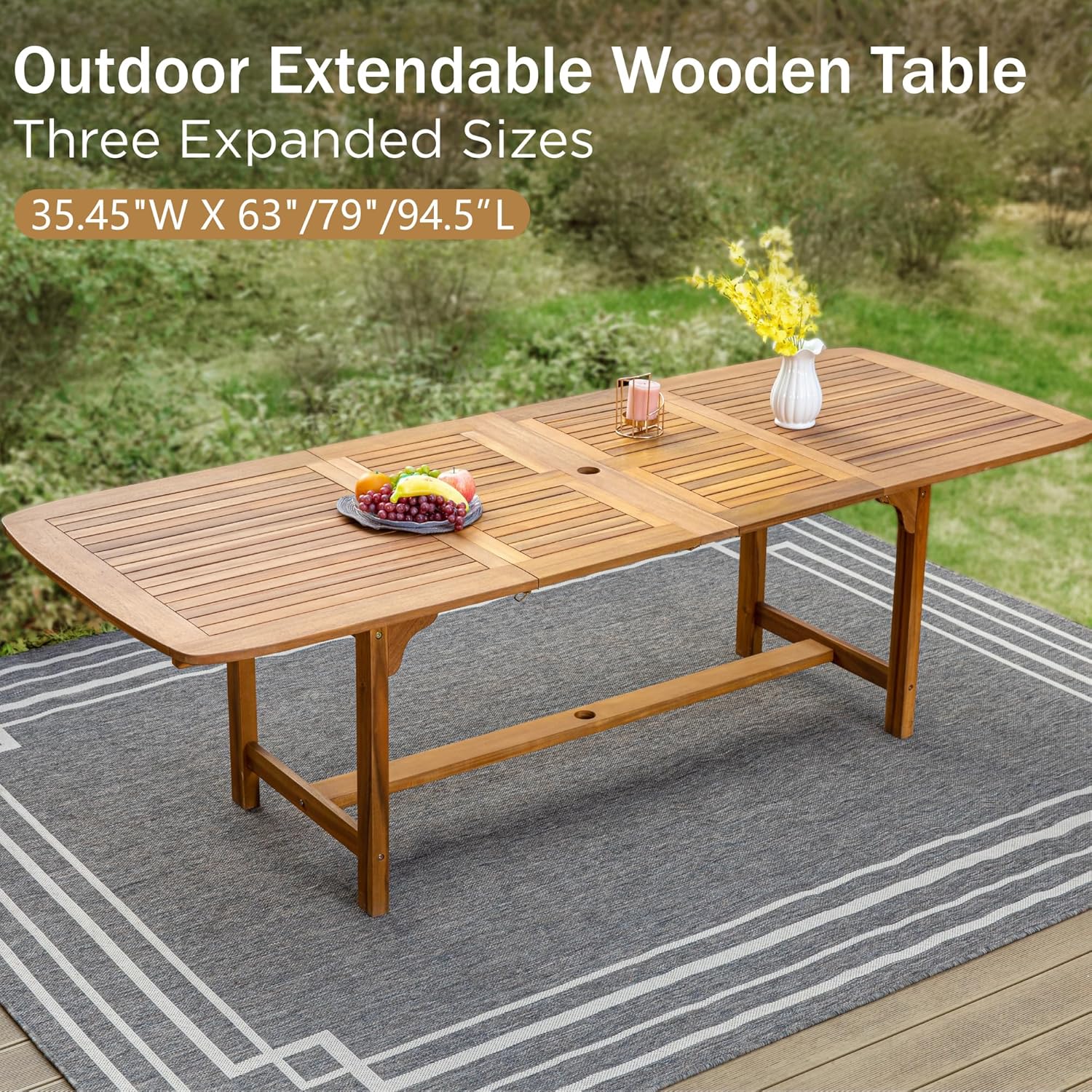
| EDITOR'S PICK[Outdoor Patio Furniture. New 9p…](https://www.amazon.com/dp/B006M3JEYW?tag=greenflower20-20) | Mid-tier[Urban Elements Mykonos 9-Piece…](https://www.amazon.com/dp/B0D4C82ZP3?tag=greenflower20-20) | Budget pick[PHI VILLA 9 Pieces Acacia Wood…](https://www.amazon.com/dp/B0FNR4BG9N?tag=greenflower20-20) | |
|---|---|---|---|
| Wood species | Indonesian teak | 100% certified teak | Acacia wood |
| Chair type | Stacking arm chair | — | Wooden with cushions |
| Table shape | Rectangle | Rectangular | Expandable |
| Cushions included | — | — | ✓ |
| Finish | Fine sanded | — | — |
| Price | $2,450.00 | $1,697.00 | $1,430.99 |
| See on Amazon → | See on Amazon → | See on Amazon → |
Why Wood Species Matters More Than the Brand Name on the Hang Tag
A lot of buyers assume that if a brand has a good reputation, the wood must be good. That’s partially true, but species determines the ceiling of what any craftsperson can build — and the floor of what the elements will do to that piece over time.
Here’s the core biology: outdoor wood furniture survives because the wood contains natural oils and resins that resist moisture absorption, repel insects, and slow the breakdown of the cellular structure. Different species contain different concentrations of those oils. Teak contains a particularly high concentration of silica and natural teak oil. Eucalyptus contains eucalyptol and other resins. Acacia varies considerably depending on the exact subspecies — and that variance is important, as we’ll cover.
The three properties that actually determine outdoor performance are:
- Janka hardness rating — a standardized measurement of how resistant the wood is to denting and wear. Higher is generally better for outdoor furniture that will see foot traffic, dragging, and impact.
- Natural oil content — determines how much the wood resists moisture without requiring owner-applied sealers or oils.
- Grain stability — how much the wood expands, contracts, and warps through seasonal temperature and humidity swings.
All three species are hardwoods (as opposed to softwoods like pine or cedar, which are rarely appropriate for serious outdoor furniture). But within the hardwood category, the differences are significant enough to change your five-year cost picture materially.
The Three Species, Evaluated Head to Head
Teak: The Benchmark Everything Else Gets Compared To
Teak (Tectona grandis) is the species against which every other outdoor wood is evaluated, and for good reason. It has the highest natural oil content of the three, the best inherent moisture resistance, and a decades-long track record in marine applications — boat decks, docks, and outdoor furniture in tropical climates — that no other species can match at scale.
Janka hardness: approximately 1,070 lbf (pound-force), which is meaningfully harder than most domestic hardwoods but not the hardest tropical species available.
What long-term owners consistently report: teak furniture left completely untreated — no annual oiling, no sealer — will naturally weather to a silver-gray patina over 12–18 months. This is not damage; it’s oxidation of the surface oils. The structural integrity remains intact for decades. Per the This Old House teak outdoor furniture guide, properly graded teak furniture can last 50 or more years outdoors with only periodic cleaning, a claim that aligns with decades of field observation in commercial hospitality settings.
The grading problem you need to understand: Teak is sold in grades (A, B, C), and only Grade A — cut from the dense, oil-rich heartwood at the center of the trunk — delivers the performance the species is known for. Grade B and C include more sapwood (the outer rings of the tree), which is far less oil-rich and noticeably less durable. A $900 “teak” dining set is almost certainly Grade B or C teak. A $3,500–$6,000 set from a reputable brand is using Grade A heartwood. This is not a branding premium; it is a material difference that becomes visible in seasons three through five.
Sustainability reality check: Plantation-grown teak from Indonesia and Central America, certified by the Forest Stewardship Council, is now the standard for responsible brands. The FSC Chain of Custody Certification — described in the FSC’s published program documentation — ensures wood can be traced from forest to finished product. If a brand cannot tell you where their teak is harvested and whether it is FSC-certified, treat that as a red flag.
The honest tradeoff: Teak is expensive — genuinely expensive. You are paying for the oil content, the grade, the sustainability certification, and the manufacturing precision required to work a very hard, dense wood. If budget is constrained, teak at $800 is not the same product as teak at $4,000.
Outdoor
$2,450.00
In stock on Amazon
Check price on AmazonEucalyptus: The Serious Contender That Most Buyers Underestimate
Eucalyptus (Eucalyptus grandis and related plantation species) has quietly become the most credible alternative to teak in the $1,200–$3,500 outdoor furniture segment, and it deserves more careful consideration than it typically gets.
Janka hardness: varies by subspecies, but Eucalyptus grandis runs approximately 1,125 lbf — actually slightly harder than teak on standardized measurement. The grain is tighter and more uniform than acacia, which contributes to better dimensional stability across seasonal swings.
What operators and long-term owners report: eucalyptus behaves similarly to teak in outdoor conditions — it weathers to a gray patina if left untreated, holds up well in coastal humidity, and resists cracking better than many comparable species. Architectural Digest’s coverage of sustainable outdoor furniture has cited eucalyptus plantation furniture as one of the stronger responsible mid-tier options, noting that eucalyptus grows to harvestable size in 7–12 years versus teak’s 25–80 years — a meaningful sustainability advantage. Dwell’s sustainable outdoor furniture buyer’s guide has similarly highlighted FSC-certified eucalyptus plantation stock for its combination of responsible sourcing and commercial-grade durability at accessible price points.
Maintenance reality: eucalyptus benefits more from periodic oiling than Grade A teak does. Left completely untreated in harsh sun, it can develop surface checking (small cracks along the grain) faster than teak. One application of teak oil or a purpose-formulated hardwood oil annually extends its life and appearance significantly. This is a 30-minute task per year — not an unreasonable commitment for a set priced $1,500–$3,000 below comparable teak.
Where eucalyptus makes the most sense: vacation rental operators and boutique hospitality buyers outfitting multiple spaces at once. The price-to-performance ratio is strong, FSC-certified eucalyptus plantation stock is widely available, and the species holds up well across the three-to-seven year replacement cycles that most commercial operators plan around.
Watch for: some manufacturers label “shorea” or “meranti” as eucalyptus-class hardwoods. These are different species with different oil profiles. Always confirm the actual species name and source region before ordering commercial quantities.
Urban
$1,697.00
In stock on Amazon
Check price on AmazonAcacia: High Visual Appeal, Higher Variance
Acacia is the category where the buyer needs to slow down and ask more questions than with either teak or eucalyptus. “Acacia” covers over 1,000 species worldwide, and the properties that matter for outdoor furniture vary significantly across them.
Janka hardness: the acacia species most commonly used in outdoor furniture — including Acacia koa, Acacia mangium, and Acacia confusa — typically range from 1,100 to 1,750 lbf. That wide spread reflects genuine material differences between subspecies, not marketing variation.
Where acacia excels: visual character. Acacia has a naturally varied grain with warm honey-to-dark-brown tones that photograph beautifully and read as premium in outdoor living room settings. At $400–$1,200, well-constructed acacia sets offer genuine hardwood performance that softwood alternatives simply cannot match at the same price point.
The maintenance commitment is real: acacia has lower natural oil content than teak and most eucalyptus. It requires more consistent attention — oiling two to three times per year in hot, dry, or coastal climates — to prevent the wood from drying, checking, or cracking. Good Housekeeping’s outdoor furniture materials review notes that properly maintained acacia furniture can deliver a decade or more of service, but furniture left unfinished in harsh sun may show significant surface degradation within two to three seasons. Bob Vila’s hardwood species guide for outdoor use similarly flags acacia’s oil-content variability as the key factor buyers should clarify before purchase, recommending buyers ask specifically which acacia subspecies is in use.
The variance problem: because “acacia” covers so many species, a set labeled acacia from a discount retailer and a set labeled acacia from a mid-market furniture brand may be genuinely different woods with meaningfully different durability profiles. The brand’s warranty terms are your signal here — a 2-year finish warranty suggests the manufacturer expects less from the material than one offering 5 years on the same category of claim.
PHI
$1,430.99
In stock on Amazon
Check price on AmazonSide-by-Side: The Numbers That Drive the Decision
| Teak (Grade A) | Eucalyptus | Acacia | |
|---|---|---|---|
| Janka hardness (approx.) | 1,070 lbf | 1,125 lbf | 1,100–1,750 lbf |
| Natural oil content | Very high | Moderate-high | Moderate-low |
| Maintenance frequency | Every 1–3 years (optional) | Annually recommended | 2–3×/year in harsh climates |
| Typical price range (4-seat dining set) | $2,500–$8,000+ | $1,200–$3,500 | $400–$1,800 |
| Realistic outdoor lifespan (maintained) | 25–50+ years | 10–20 years | 8–15 years |
| FSC certification available? | Yes — leading brands | Yes — most reputable brands | Variable — ask specifically |
How to Decide: The “If X, Then Y” Rules
After mapping the species against each other, most purchase decisions resolve cleanly once you’re honest about three variables: budget, maintenance tolerance, and intended use duration.
If you are furnishing a permanent outdoor living room and want a set that outlasts your ownership of the home: buy Grade A teak from a brand that publishes its sourcing documentation and can confirm FSC Chain of Custody tracking. The premium is real; so is the return on that investment over a 25-year horizon.
Outdoor
$2,450.00
In stock on Amazon
Check price on AmazonIf you are outfitting a vacation rental, commercial property, or secondary space where a five-to-ten-year lifespan at lower acquisition cost is the right financial model: eucalyptus at the $1,500–$2,500 range is your strongest play. The species has earned consistent recognition in publications including Architectural Digest and Dwell specifically for combining sustainability credentials with mid-tier durability.
Urban
$1,697.00
In stock on Amazon
Check price on AmazonIf you are in the $400–$1,000 window and primarily need a starting point for a deck or balcony: acacia is a legitimate choice — but budget explicitly for annual oiling and plan for more active maintenance than you would need with teak or eucalyptus. A set that is maintained consistently, per the guidance in the Good Housekeeping outdoor furniture materials review, will serve you well for a decade.
PHI
$1,430.99
In stock on Amazon
Check price on AmazonIf a seller cannot tell you the species subspecies, the grade, or the source region: walk away, regardless of how the piece looks on the showroom floor. The properties that make outdoor wood furniture durable are invisible at point of purchase and only reveal themselves in the third or fourth season.
One Final Word on Sustainability Certification
The Forest Stewardship Council’s Chain of Custody Certification is not a branding exercise. It is the only third-party-verified system that confirms wood was harvested legally, from managed forests, without contributing to old-growth depletion. For buyers in the mid-to-premium segment, it should be a baseline requirement, not a bonus feature.
For teak specifically, insist on FSC documentation. The price premium for certified stock is real but modest relative to the total purchase, and it protects you from inadvertent participation in supply chains that responsible brands have spent decades moving away from. For eucalyptus, FSC-certified plantation stock is now widely available from reputable suppliers, and the This Old House outdoor wood furniture guide has noted it as the benchmark buyers should use to qualify any eucalyptus claim. For acacia, FSC certification is variable by brand — ask the question directly before any commercial-quantity order.
Wood is the most unforgiving category in outdoor furniture to get wrong, because the errors compound over years rather than revealing themselves immediately. The species decision is the most important you will make before signing a purchase order — and now you have the framework to make it with confidence.