When you’re shopping for outdoor furniture in the $1,500-and-up range, two frame materials come up constantly: powder-coated aluminum and teak. Powder-coated aluminum means the metal frame has been coated in a dry powder finish that’s baked on under heat, creating a hard, weather-resistant shell. Teak is a dense tropical hardwood — specifically Tectona grandis — prized outdoors because its natural oils repel moisture and resist decay without much intervention. Both are legitimate premium choices. But “premium” doesn’t mean “right for every situation,” and the climate you live in changes that calculus significantly. This article gives you a concrete, climate-by-climate breakdown of how each material performs, what maintenance it actually demands, and the tradeoffs that should drive your final decision. By the end, you’ll have a clear decision rule you can apply to your specific project.
Why Climate Is the Real Variable (Not Just Price)
Most buying guides compare teak and aluminum as if furniture lives in a controlled showroom. It doesn’t. A powder-coated dining set that performs flawlessly in Denver can show pinpoint rust at the welds within two seasons in coastal Florida. A teak sectional that ages gracefully in the Pacific Northwest can crack and check in an Arizona summer. The material isn’t failing — it’s just meeting conditions it wasn’t optimized for.
The four climate types that matter most for this decision:
- Coastal/salt-air (South Florida, Gulf Coast, Pacific Coast marine zones)
- Humid subtropical / high-rain (Southeast U.S., Pacific Northwest)
- Arid/high-UV (Southwest desert, high-altitude mountain west)
- Freeze-thaw (Upper Midwest, Northeast, mountain regions)
Each creates a distinct failure mode for both materials. Let’s go through them.
Climate-by-Climate Performance: The Real Breakdown
Coastal and Salt-Air Environments
This is where the stakes are highest and the specification decisions are most consequential.
Powder-coated aluminum in salt air performs well — but only when the coating system is genuinely marine-grade. The aluminum substrate itself won’t rust (it’s non-ferrous), but salt air is acidic and abrasive, and it attacks anywhere the powder coat is thin, chipped, or improperly applied — particularly at welds and fasteners. Premium manufacturers use multi-stage pretreatment processes, typically a chromate or zirconium conversion coating applied before the powder, that dramatically improve adhesion and corrosion resistance. Budget-tier aluminum with a single-stage powder coat will show cosmetic and structural degradation within two to four years in salt-air conditions. According to Good Housekeeping’s testing and review coverage of outdoor furniture materials, verifying a manufacturer’s pretreatment process — not just the warranty language — is the single most important specification step for coastal buyers. The distinction matters enormously at spec time.
Teak in salt air is arguably the most historically proven outdoor material for coastal applications — it’s been used in boat construction for centuries specifically because its silica and oil content repel water intrusion. Architectural Digest, in its coverage of outdoor furniture materials for different climates, notes that owners of premium teak collections in coastal zones consistently report minimal structural issues even after a decade or more of exposure. The main variable is whether the teak is FSC-certified plantation teak (the current standard from brands like Gloster and Janus et Cie) or older-sourced old-growth teak, which is now largely unavailable and ethically problematic. The Forest Stewardship Council’s Chain of Custody Certification Standard governs the harvesting and processing requirements that maintain the material properties buyers are paying for — asking a vendor whether their teak carries FSC certification is a straightforward way to verify this at purchase.
Coastal verdict: Teak holds a slight edge purely on material resilience, with no coating to fail. Marine-grade powder-coated aluminum from a premium manufacturer is a legitimate alternative, but you need to verify the pretreatment spec — not just the warranty language.
 product image](/images/external/017bc01a12ff.jpg)
Modway
$3,531.05
In stock on Amazon
Check price on AmazonHumid Subtropical and High-Rain Environments
Think Atlanta, Houston, Charleston, Seattle. High ambient humidity, frequent rain, and — in the Southeast — intense UV exposure layered on top of persistent moisture.
Powder-coated aluminum handles humidity well structurally — the frame won’t absorb water, warp, or swell. The risk here is galvanic corrosion at fastener points if stainless steel hardware isn’t used throughout, and standing water collecting in hollow extrusions if drainage holes aren’t present. Reputable manufacturers engineer drainage into the frame profile. Bob Vila’s guidance on caring for outdoor aluminum furniture specifically flags drainage hole inspection as an annual maintenance step, recommending that owners clear debris from drainage points each spring to prevent standing water from accelerating corrosion at the interior of hollow frame sections. Surface-level fading and chalking of the powder coat can begin in seven to ten years in high-UV, high-humidity environments.
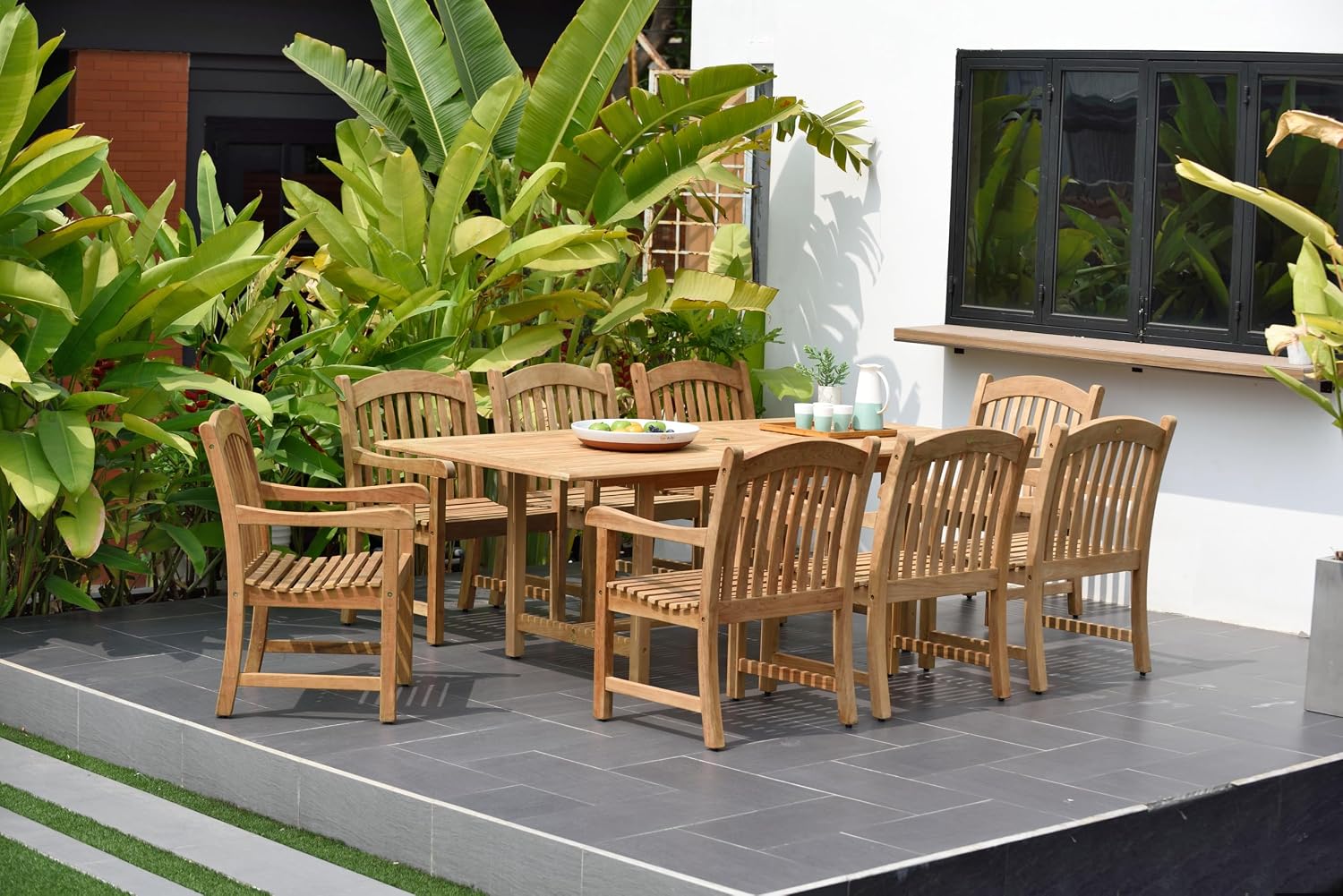
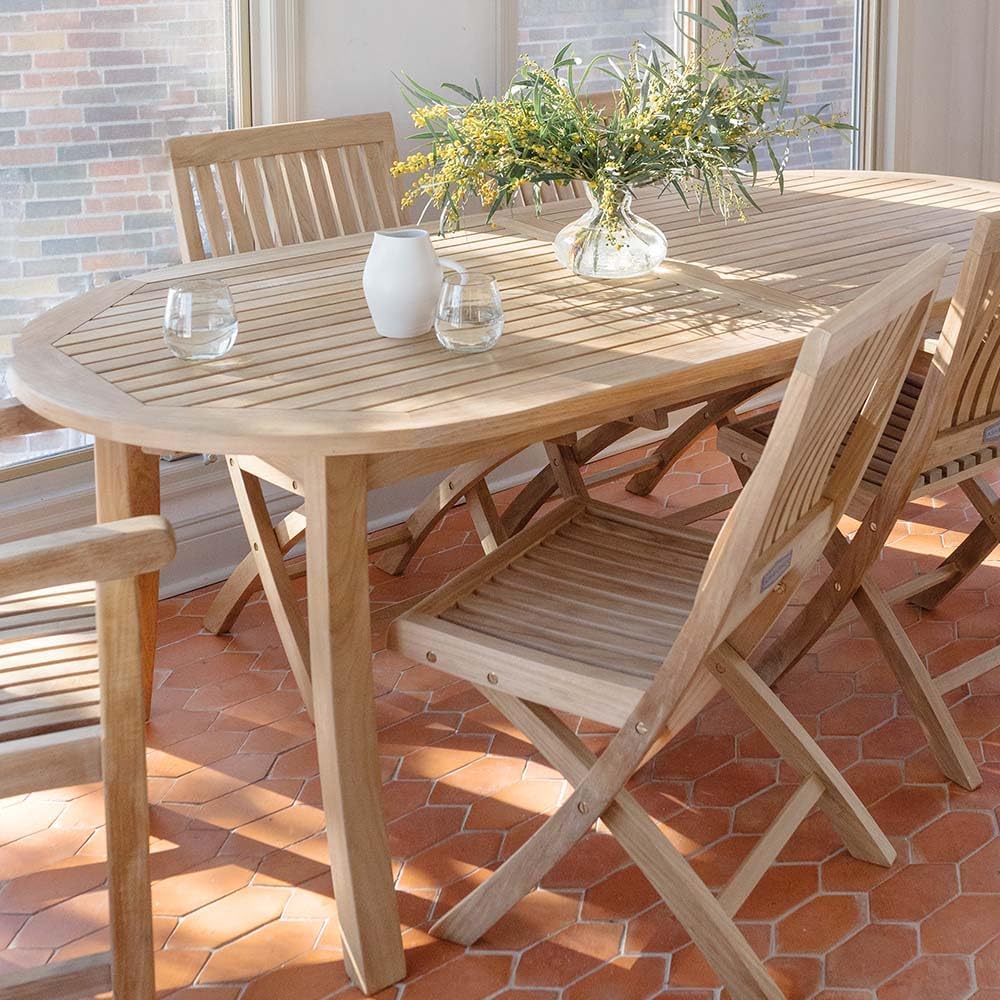
Teak in humid conditions performs well but requires more active maintenance than in drier climates. Teak left untreated in high-humidity environments will develop a silver-gray patina (entirely structural, not damage) within one season, and can develop surface mold or mildew in shaded, poorly ventilated settings. This Old House’s teak furniture care and maintenance guide recommends a two-part teak cleaner applied annually in humid climates, followed by a brightener application to restore the golden tone for owners who prefer that look over the weathered gray. Annual cleaning with a purpose-formulated teak cleaner keeps the wood looking intentional rather than neglected.
Humid subtropical verdict: Roughly even. Aluminum requires less active maintenance. Teak requires more attention but rewards it with a richer aesthetic that many owners in this climate specifically seek.
Amazonia
$2,297.00
In stock on Amazon
Check price on AmazonArid and High-UV Environments
Phoenix, Tucson, Las Vegas, Albuquerque, and high-elevation Colorado and Utah represent the sharpest test for UV stability and thermal cycling.
Powder-coated aluminum in arid/high-UV conditions faces two primary stressors: UV degradation of the powder coat itself, and dramatic thermal expansion and contraction as temperatures swing from 110°F midday to 65°F overnight. Standard polyester powder coats begin to chalk and lose sheen after five to seven years in high-UV environments. The better specification is a TGIC-free polyester or a thermosetting polyester with UV stabilizers — this detail appears in technical data sheets from premium manufacturers but rarely in consumer-facing marketing copy. Good Housekeeping’s outdoor furniture materials coverage notes that UV-stabilized powder coat formulations represent a meaningful upgrade in desert and high-altitude environments, and that buyers should ask specifically about UV inhibitor additives rather than relying on warranty language alone.
Teak in arid environments faces cracking and checking (surface cracks along the grain) as its natural moisture content cycles with low ambient humidity. This is primarily cosmetic rather than structural in well-dried plantation teak, but it’s real. Architectural Digest’s outdoor materials coverage notes that owners in desert climates consistently report needing more frequent oiling — sometimes twice annually — to maintain surface integrity compared to owners in moderate climates. Teak that has been properly kiln-dried before sale handles low-humidity conditions better than green-cut material, but consumers rarely have visibility into that processing step without asking directly.
Arid/high-UV verdict: Powder-coated aluminum has the edge here, particularly for commercial or vacation-rental properties where maintenance frequency is a cost variable. Teak can work but demands a more attentive maintenance schedule than most owners in this climate sustain in practice.
Ash
$1,329.99
In stock on Amazon
Check price on AmazonFreeze-Thaw Environments
Minneapolis, Chicago, Boston, Denver’s front range, and similar climates with true winter — including snow, ice, and repeated freeze-thaw cycles.
Powder-coated aluminum in freeze-thaw climates is largely low-risk from the frame perspective, since aluminum doesn’t absorb water and won’t crack under freeze pressure. The risk points are fastener corrosion from road salt and snowmelt if the furniture isn’t stored or covered, and coating damage from ice scraping during cleanup. Bob Vila’s aluminum furniture care guidance recommends applying a light coat of car wax to powder-coated surfaces before winter storage to prevent moisture from working into any micro-chips in the finish during freeze-thaw cycles. Most premium aluminum furniture is suitable for year-round outdoor storage in cold climates when properly covered.
Teak in freeze-thaw climates performs reliably when properly dried at manufacture, but the volume changes from absorbed moisture freezing within the wood can accelerate surface checking over time. This Old House’s teak maintenance guidance suggests that storing teak furniture indoors or under high-quality breathable covers through hard winter months extends finish life noticeably. Structurally, properly kiln-dried teak handles freeze-thaw without joint failure — the mortise-and-tenon or stainless bolt joinery used by premium brands is built to accommodate seasonal wood movement — but the cosmetic surface benefits meaningfully from protection.
Freeze-thaw verdict: Aluminum is lower-maintenance for owners who don’t want to store furniture seasonally. Teak survives winter well with covers or storage but demands a more intentional off-season protocol.
Side-by-Side Summary
| Climate | Aluminum Advantage | Teak Advantage | Maintenance Edge |
|---|---|---|---|
| Coastal/salt-air | Marine-grade coat resists corrosion | Natural oils, no coating to fail | Teak (no coat to chip) |
| Humid/subtropical | No moisture absorption, no warping | Rich aesthetic ages gracefully | Aluminum (less active care) |
| Arid/high-UV | Thermally stable; no cracking risk | Proven material if oiled regularly | Aluminum |
| Freeze-thaw | No freeze damage; store-or-leave flexibility | Structurally sound with covers | Aluminum |
The Warranty Reality Check
Warranties on outdoor furniture frames tell you more about a brand’s confidence in their manufacturing than about the furniture’s actual performance ceiling.
Most premium powder-coated aluminum brands — Brown Jordan and Gloster among them — offer lifetime structural warranties on their frames but distinguish finish coverage as a separate, shorter-duration commitment, typically five years on the powder coat. That’s a structural warranty, not a finish warranty. These distinctions matter when you’re specifying for a commercial property where replacement cost is a real budget line. Good Housekeeping’s outdoor furniture testing coverage specifically calls out the gap between structural and finish warranty terms as one of the most commonly misread fine-print items in premium outdoor furniture purchases.
Teak frame warranties from premium brands typically cover joint failure and structural cracking — not cosmetic checking — for 10 to 25 years, reflecting the material’s proven longevity. The Forest Stewardship Council’s Chain of Custody Certification Standard provides the underlying supply-chain verification that gives those long-duration warranties their credibility: certified plantation teak meets documented density and oil-content thresholds that old-growth sourcing once provided but is no longer reliably available.
Cushion fabric warranties are a separate clock entirely. Solution-dyed acrylic fabrics from performance fabric manufacturers are typically warranted against fading for five years under normal outdoor use per published brand documentation — that clock runs from purchase, so it’s worth factoring into replacement cycle planning for commercial operators who purchase furniture and cushions together.
The Decision Rule: If X, Then Y
After reviewing the climate data and warranty structures, here’s the cleaner decision framework:
If you’re in a coastal or salt-air zone and prioritizing longevity over 10-plus years with minimal structural maintenance, teak from an FSC-certified premium brand is the lower-risk long-term bet — provided you’re comfortable with the annual maintenance ritual and the weathered patina aesthetic. If you prefer a specific color palette (black, white, bronze, slate), marine-grade powder-coated aluminum from a manufacturer with documented multi-stage pretreatment is legitimate — but verify the spec, not just the warranty language.
If you’re outfitting a vacation rental or multi-unit commercial property in any climate, powder-coated aluminum wins on total cost of ownership. Lighter weight means easier moves and staff handling; consistent colorways make phased replacement less visible; and lower per-piece maintenance labor multiplies across units.
If you’re in an arid climate and plan to use the furniture year-round without significant maintenance, aluminum is the cleaner choice. Teak works but requires a twice-annual oiling commitment that Architectural Digest’s coverage notes many owners in this climate under-deliver on in practice.
If aesthetics relative to your interior architecture are the primary driver and you’re in a humid or moderate climate, teak’s warmth and material authenticity is genuinely difficult to replicate with aluminum. Operators who’ve gone through both materials consistently note, per coverage in both Architectural Digest and Dwell’s outdoor living features, that teak reads as a permanent design decision — aluminum, even at the premium tier, reads as outdoor furniture. That distinction matters differently to different buyers, but it’s a real one.
The honest bottom line: neither material is universally superior. The right answer is a function of your specific climate, your maintenance appetite, your replacement cycle tolerance, and the aesthetic target you’re holding. The brands operating at the premium tier have largely solved the core engineering challenges in both materials. Your job at spec time is to match the material’s climate behavior profile to your actual conditions — not just your budget.