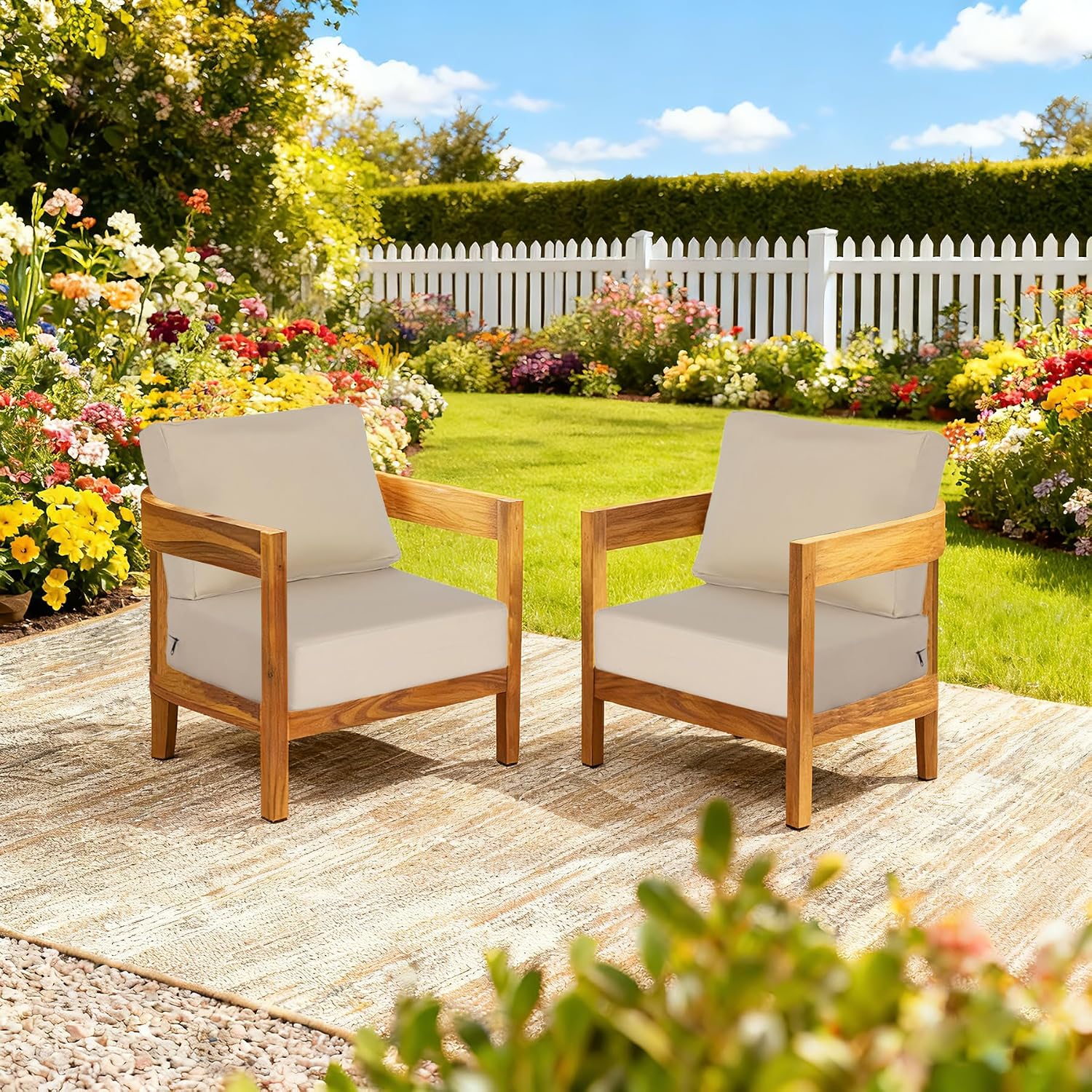
If you’re shopping for outdoor cushions — the padded seats and backs that make patio furniture actually comfortable — you’ve almost certainly seen the word “Sunbrella” used as shorthand for “the good fabric.” That reputation is largely earned. Sunbrella is a brand of solution-dyed acrylic fabric made by Glen Raven Inc., which means the color is baked into each fiber during manufacturing rather than applied on top, the way a T-shirt gets dyed. That process is why the fabric resists fading so stubbornly. But here’s the thing most furniture listings don’t tell you: “Sunbrella” on a tag doesn’t mean you’re getting the same product across the board. Glen Raven makes several distinct fabric lines — each with different thread weights, different weave constructions, different warranty terms, and meaningfully different real-world performance. Buying a set of dining chairs with Sunbrella Grade 1 upholstery is not the same investment as buying deep-seating cushions in Sunbrella Marine Grade. This guide decodes exactly what those distinctions mean, so you can match the right fabric to your climate, your use case, and the warranty terms you actually need.
The Grade Spectrum: Not All Sunbrella Is Created Equal
Glen Raven organizes its Sunbrella fabric into several product families, and the names matter more than most retailers let on.
Sunbrella Upholstery (the entry tier) is what you’ll find on the widest range of mid-market outdoor furniture — brands like Telescope Casual, Hampton Bay’s upper lines, and many Pottery Barn Outdoor pieces. It’s a 5.5–7 oz per square yard fabric (weight is a proxy for thread density and durability). It carries a 3-year warranty against fading and deterioration from Glen Raven. For a covered porch in a mild climate, that may be perfectly adequate. For a sun-drenched Florida lanai or a Houston rooftop that gets ten months of direct UV exposure, it’s the floor, not the ceiling.
Sunbrella Plus is the middle tier that often goes unlabeled in retail listings — a fact worth flagging. It runs roughly 8 oz per square yard and was engineered specifically for deeper resistance to water absorption and mold. Glen Raven’s published specs show it has a higher moisture-wicking architecture than standard upholstery grade, which matters in humid coastal climates or anywhere cushions regularly get rained on before they dry completely. The warranty steps up to 5 years.
Sunbrella Marine and Awning Grade is the top of the line for outdoor applications. Originally designed for boat canopies and awnings that live outdoors 365 days a year with zero seasonal storage, this fabric runs 9.25 oz per square yard and carries a 5-year warranty with language that explicitly covers color loss and UV degradation. Brands like Brown Jordan, Gloster, and Janus et Cie — when they specify Sunbrella at all — typically use this grade or the closely related Sunbrella Shift and Sunbrella Transcend collections (which are premium-tier pattern weaves on the same base construction). The Architectural Digest outdoor fabric guide notes that marine-grade Sunbrella is the benchmark specification for luxury residential outdoor projects precisely because its warranty language is unambiguous about UV exposure being a covered condition, not an excluded one.
Sunbrella Shift and Transcend are worth naming specifically because they appear frequently in high-end showroom spec sheets but confuse buyers who don’t recognize the sub-brand. Both are pattern-forward weaves — jacquards and heathered textures — built on a marine-grade foundation. They carry marine-grade warranty coverage and pricing but add a design premium. If a Brown Jordan collection lists “Sunbrella Transcend” as the fabric, you’re getting marine-level durability in a fashion-forward weave. That’s a real value if the aesthetic is the point.
Fade Warranty Fine Print: What “Fade Resistant” Actually Covers
This is where the label diverges sharply from what buyers assume it means.
Glen Raven’s warranty documentation — available directly from their website — defines covered fading as color loss exceeding a measurable threshold on the standard industry scale (the Grey Scale for color change), under “normal outdoor use.” That phrase does real work. Here’s what it means in practice:
What’s covered: UV-induced fading of the base fabric color, measured against a standardized color-retention scale. If your cushions lose significant color from sun exposure within the warranty period, Glen Raven’s process allows you to submit a claim with a fabric sample for evaluation.
What’s typically not covered:
- Fading caused by pool chemicals (chlorine bleach, saltwater splash)
- Staining from sunscreen, body oils, or food that alters the perceived color
- Mildew growth on the fabric surface (mildew resistance refers to the fabric itself, not the cushion fill underneath — more on this shortly)
- Damage from improper cleaning (bleach concentrations above what Glen Raven prescribes)
Consumer Reports’ outdoor furniture fabric overview flags this distinction explicitly: buyers frequently conflate fade resistance with stain resistance, then feel misled when a salsa stain doesn’t rinse clean. They’re different properties.
Fade resistance in Sunbrella is structural — it comes from solution dyeing and is genuinely excellent across all grades. Stain resistance depends on finishing treatments and is more variable. All Sunbrella fabric has some stain resistance due to its tight acrylic weave (liquids bead rather than absorbing immediately), but the practical implication is: act fast. Glen Raven’s own Fabric Care and Cleaning Guide specifies that for most stains, a solution of mild soap and lukewarm water, applied promptly, is the correct treatment. Letting a stain set — especially oil-based stains from sunscreen — can create discoloration that isn’t covered as “fading” under warranty.
The Cushion Fill Problem Nobody Talks About
Here’s the issue that trips up even experienced buyers: Sunbrella fabric is not the cushion. The cushion is the whole product. A warranty on the Sunbrella shell means nothing if the fill underneath is deteriorating.
Outdoor cushion fills fall into three main categories:
| Fill Type | Typical Lifespan | Water Behavior | Notes |
|---|---|---|---|
| Open-cell polyurethane foam | 2–4 seasons | Absorbs and retains water | Budget tier; compresses and holds moisture that causes mildew |
| Closed-cell polyurethane foam | 4–7 seasons | Resists absorption | Better, but still degrades under repeated UV and compression |
| Quick-dry polyester fiber | 3–5 seasons | Drains rapidly | Used by Brown Jordan, Gloster; maintains loft better than foam in wet climates |
This Old House’s patio cushion buying guide notes that the most common failure mode for premium outdoor cushions isn’t the Sunbrella cover — it’s the foam core that absorbs water, begins to smell, and loses its shape long before the fabric shows wear. This is why manufacturers like Brown Jordan and Gloster specify proprietary quick-dry foam blends and why it matters that you ask your retailer about fill specs, not just fabric specs.
The warranty implication: If your Sunbrella cover is in good shape but the cushion smells like mildew and has collapsed in the center, the fabric warranty is irrelevant. You have a fill problem. And fill is rarely covered under any warranty beyond a basic manufacturing defect window.
By the Numbers
| Grade | Weight (oz/sq yd) | Fade Warranty | Relative Price Premium vs. Entry Grade |
|---|---|---|---|
| Sunbrella Upholstery | 5.5–7 oz | 3 years | Baseline |
| Sunbrella Plus | ~8 oz | 5 years | +15–25% |
| Sunbrella Marine/Awning | 9.25 oz | 5 years | +25–40% |
| Sunbrella Shift/Transcend | 9.25 oz base | 5 years | +40–60% (pattern premium) |
Sources: Glen Raven Inc. published spec sheets and warranty documentation, 2024.
Matching Grade to Climate and Use Case
House Beautiful’s outdoor fabric durability explainer makes a point worth repeating here: the right Sunbrella grade is a function of UV load, moisture exposure, and how often the cushions are actually brought in. These three variables matter more than price tier alone.
Covered porch, mild climate, cushions stored in winter: Upholstery grade is probably fine. The 3-year warranty aligns with a realistic 5–7-year ownership horizon if you’re diligent about storage and cleaning. Hampton Bay’s upper lines and Christopher Knight Home’s better outdoor sets frequently use this grade with reasonable results, per aggregated owner reviews.
Open deck, coastal or sun-belt climate, cushions left out in rain: This is the scenario where upholstery grade starts costing you more in the long run than the price premium for Plus or Marine grade. Owners of deep-seating arrangements in Florida and coastal Texas — where cushions may see 300+ days of direct UV annually — consistently report that upholstery-grade Sunbrella begins to show noticeable fading in years two and three, while marine-grade sets from the same era look comparably fresher. The 5-year warranty on marine grade isn’t just a number; it signals that Glen Raven engineered this product for continuous outdoor exposure.
Vacation rental or short-term rental property: The calculus shifts to durability per cleaning cycle and resistance to guest use (sunscreen, food, more aggressive cleaning by housekeeping staff). For operators in this segment — outfitting multiple units with Polywood, Telescope Casual, or comparable commercial-tier furniture — Sunbrella Plus or Marine grade is the sensible specification. The premium per set is real but amortizes over fewer replacement cycles. Consumer Reports’ outdoor furniture overview notes that commercial operators managing STR properties increasingly specify marine-grade fabric as a minimum standard precisely because the warranty process provides documentation useful for property insurance and replacement cost accounting.
High-design residential project with Janus et Cie or Brown Jordan: At this tier, you’re almost certainly already in Sunbrella Shift or Transcend territory — the spec is baked into the brand’s offering, and the pattern library is part of the value proposition. The relevant question shifts from “which grade?” to “which collection coordinates with your interior architecture?” That’s a design question, not a durability question. The durability is solved.
If X, Then Y: Your Decision Rule
-
If your outdoor space is covered or partially shaded, you’re in a mild climate, and you store cushions seasonally → upholstery grade is adequate. Prioritize fill quality over fabric upgrade.
-
If your cushions stay outside year-round, your climate gets 250+ sunny days annually, or you’re in a coastal/humid environment → specify Sunbrella Plus or Marine grade. The 5-year warranty language is your baseline, not a bonus.
-
If you’re furnishing a rental property or multi-unit hospitality space → Marine grade is the correct specification. The incremental cost per set is real; the documentation and replacement cycle savings are more real.
-
If you’re buying at the Brown Jordan / Gloster / Janus et Cie tier for a permanent outdoor living room → ask specifically which Sunbrella collection the cushions use and request the fill spec in writing. The fabric is likely already marine-grade. Your risk point is the fill, not the cover.
-
In all cases: read the warranty exclusions before purchase, not after. The clause about pool chemicals and improper cleaning agents is the one that voids claims most often, per Glen Raven’s own documentation. Clean early, clean correctly, and keep the receipt.
The Sunbrella name earns its reputation — but only when you’re buying the right grade for how you actually use your outdoor space. The label tells you part of the story. Now you know how to read the rest of it.